Prompt · the slowest action
Pour Without Stopping
Two cups, water, a quiet room. Pour from one cup to the other as slowly as possible. Record three versions. Which one held your attention longest, and why?
A composition does not have to be a list of notes. It can be a sentence, a task or a limit. Here are techniques that start from instructions and ordinary materials, each with something you can try in the next ten minutes.
Choose your first sound material
The Futurist painter Luigi Russolo argued in his 1913 manifesto The Art of Noises that city sounds deserved a place in music. You do not need his custom-built noise machines. Walk around your home with one question: which objects have a sound I can control?
Pick one material from the list. Spend five minutes finding every sound it can make before you decide anything about structure. Composers who skip this step often end up with one obvious sound repeated. Composers who take it find variety hidden inside a single object.
In the early 1960s, artists connected with Fluxus began writing what they called event scores: short instructions that could be performed by anyone. La Monte Young's Composition 1960 #10 reads simply: "Draw a straight line and follow it." Yoko Ono gathered dozens of instruction pieces in her book Grapefruit (1964). George Brecht's Drip Music asks for a source of dripping water and an empty vessel.
What makes a good text score is precision about the task and freedom about the result. "Make an interesting sound" gives a performer nothing. "Pour water from one cup to another, as slowly as you can without stopping" gives a clear action, a limit, and a sound nobody can fully predict.
When you write your own, test it on another person without explaining. If they ask a question, decide whether the answer belongs in the score or whether their uncertainty is part of the piece.
Prompt · the slowest action
Two cups, water, a quiet room. Pour from one cup to the other as slowly as possible. Record three versions. Which one held your attention longest, and why?
Prompt · the forbidden sound
Choose an object and ban the sound it usually makes. A bell may not ring. A pen may not click. Compose one minute using only what remains.
Prompt · the single word
Write one word, such as brittle. Find five sounds that match it from five different objects. Arrange them from least to most brittle.
Prompt · the borrowed action
Copy the steps of a recipe and replace each verb with a sound action. "Stir" becomes a circular scrape; "rest for five minutes" becomes silence.
In 1940 John Cage placed screws, bolts and strips of rubber between piano strings for the dance piece Bacchanale, turning one piano into a small percussion ensemble. The principle works on almost anything with a vibrating part. A paperclip on a guitar string buzzes. A sheet of foil on a drum head rattles. A coin resting on a ukulele's top changes its resonance.
Be careful and reversible: use soft materials near delicate strings, never force objects into an instrument you cannot repair, and write down exactly where each item went so the preparation can be repeated. That written list becomes part of your score.
Pierre Schaeffer broadcast his Étude aux chemins de fer in 1948, built from recordings of trains. He called the approach musique concrète: composing directly with recorded sound rather than writing symbols first. A phone and a free audio editor are enough to try it. Record one everyday sound, then make three versions: reversed, slowed, and cut into short fragments that loop. Listen to how the source becomes less recognisable and more musical, and notice the moment it stops sounding like "a train" and starts sounding like "a rhythm".
Unconventional structure
Without a beat, you need other ways to organise time. Use a clock, a breath, a physical task or a single event as the frame. Open each variation and try one with your material.
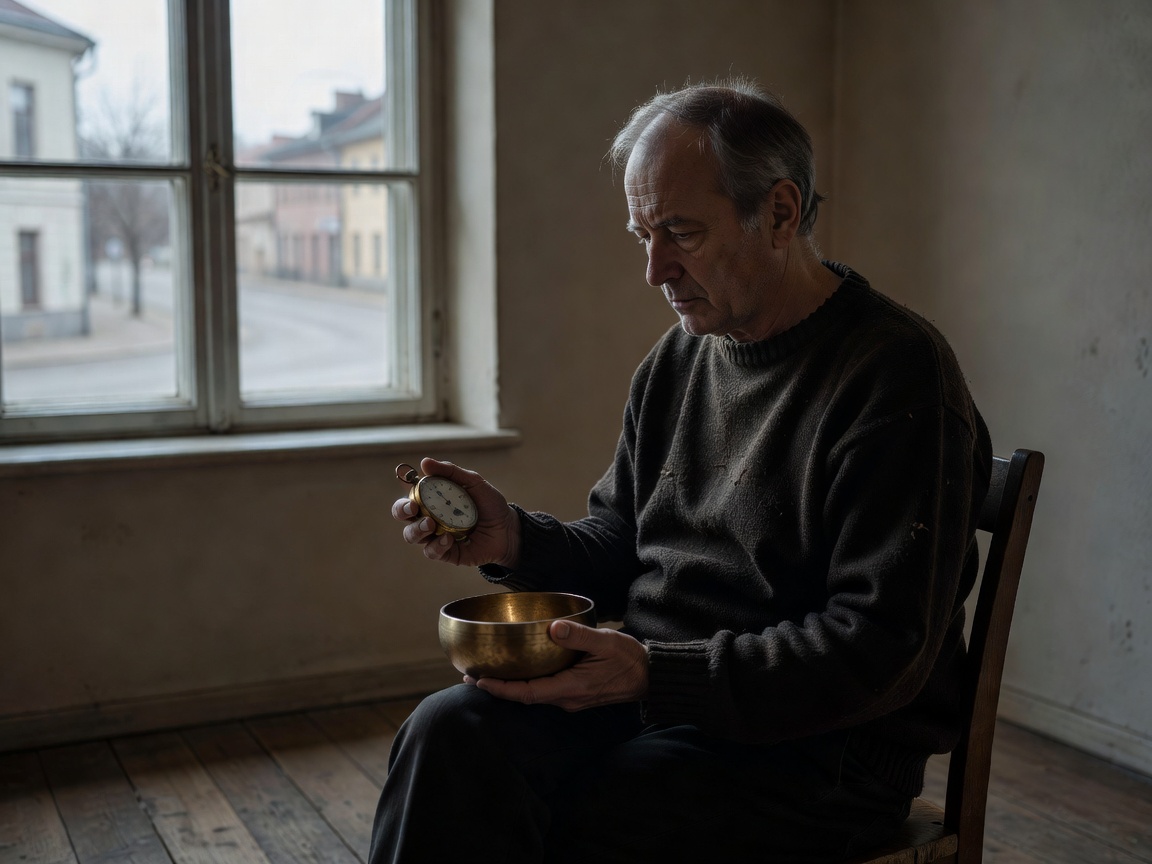
Write sounds at exact seconds: 0:05 scrape, 0:31 drop, 1:12 hum. Performers watch a stopwatch. Cage's 4′33″ used timed movements in this way.
Each sound lasts one exhalation. The piece speeds up or slows down with the performer's body, so every performance has its own length.
The piece ends when the task ends: when the jar is empty, when the ice has melted, when the paper is torn into twenty pieces.
Wait for something outside your control, such as a passing car or a bird, and respond to it. The world becomes your conductor.
About cookies Essential cookies keep this site working. Optional ones help us see what is useful. You can change your choice at any time. More about cookies